
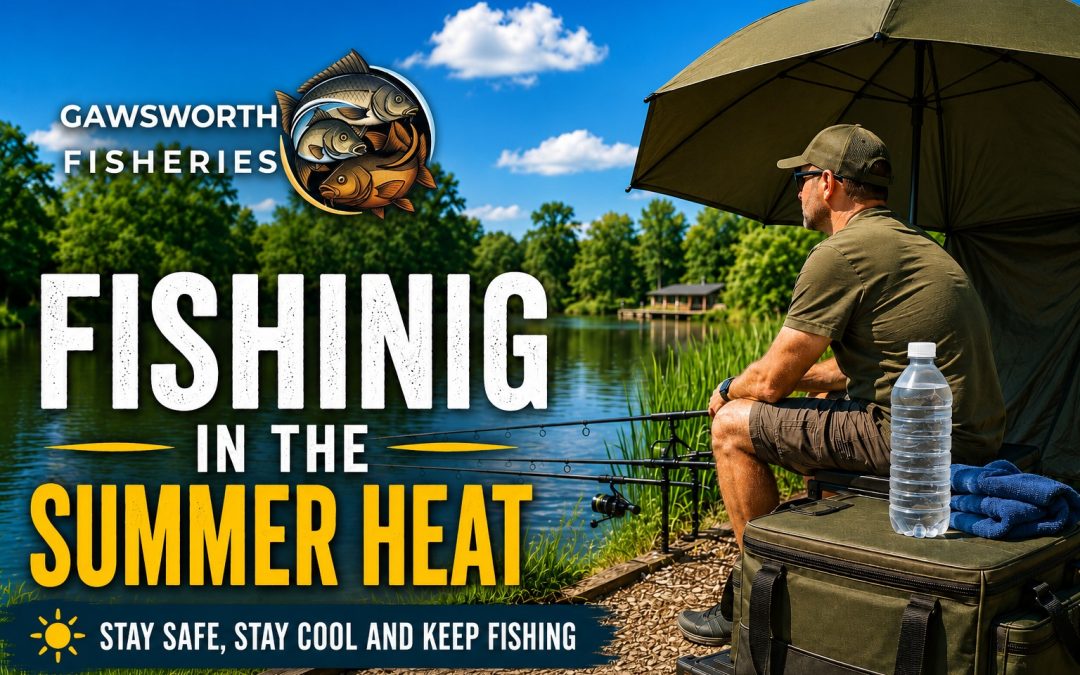
A hot summer’s day can produce some excellent fishing. Long daylight hours, warm water and active fish can make it tempting to stay on the bank from first light until dusk—or even through the night.
Most committed anglers are used to putting up with whatever the weather throws at them. Rain, wind, frost and muddy banks are all part of fishing. However, extreme summer heat presents a different challenge, and it can catch out even the most experienced angler.
A little preparation can help you stay comfortable, protect your health and enjoy a full day’s fishing without the heat bringing your session to an early end.
Start Early or Fish Later
During very hot weather, the best conditions are often found early in the morning or later in the evening. These periods are usually cooler for the angler and can also be productive times to fish.
Where possible, avoid arriving during the hottest part of the day. The sun is generally at its strongest between 11am and 3pm, so consider using this period to rest in the shade, prepare tackle or take a break from more physical jobs around your peg.
Even hardened anglers benefit from planning their session around the weather rather than trying to battle through the worst of it.
Bring More Water Than You Think You Need
Sitting beside a lake may not feel like hard physical work, but unloading tackle, pushing a barrow, setting up a bivvy, landing fish and repeatedly casting can all take their toll in hot conditions.
Bring plenty of drinking water and take regular drinks throughout the day. Do not wait until you feel desperately thirsty before reaching for a bottle.
Tea and coffee may still be part of the fishing routine, but they should not replace water. Excessive alcohol is also best avoided during very hot weather, as it can contribute to dehydration and make it harder to recognise when the heat is beginning to affect you.
A cool box or insulated bag can help keep drinks, food and bait in better condition throughout a long session.
Create Some Shade
Shade can make a huge difference during a long day on the bank. A fishing umbrella, bivvy, shelter or simple sun canopy gives you somewhere to get out of direct sunlight.
Try to position your seat and tackle so you are not sitting in full sun for hours without a break. Remember that the sun moves across the sky, so a shaded peg in the morning may be fully exposed by lunchtime.
A wide-brimmed hat or cap, lightweight loose-fitting clothing and good-quality sunglasses can also help protect you. Apply a high-factor sunscreen before you begin fishing and remember to reapply it during the day, particularly if you are sweating heavily or handling water regularly.
The tops of the ears, back of the neck, face, hands and lower legs are areas anglers often forget.
Eat Properly During a Long Session
Hot weather can reduce your appetite, but that does not mean your body no longer needs fuel.
Take food that is easy to eat and store safely. Sandwiches, fruit, cereal bars and other light meals can help maintain your energy without making you feel overly full in the heat.
Avoid leaving fresh food sitting in direct sunlight or inside a hot vehicle. Store anything perishable in a cool box and throw it away if you are unsure whether it is still safe to eat.
Recognise the Warning Signs
Heat exhaustion can develop gradually. Early signs can include tiredness, dizziness, headache, nausea, heavy sweating, thirst, weakness or feeling unusually unwell.
Do not simply assume you are tired after an early start.
Stop fishing, move into the shade, remove unnecessary clothing, cool your skin and take regular sips of water. Let another angler or a member of staff know that you are feeling unwell rather than sitting alone and hoping it passes.
Heatstroke is more serious and requires urgent medical help. Warning signs can include confusion, poor coordination, very hot skin, a fast heartbeat or remaining unwell after cooling down.
Experienced anglers are often reluctant to pack up, but no fish is worth risking your health for.
Think About Medication and Existing Health Conditions
Some medical conditions and medicines can make people more vulnerable during hot weather.
Anyone taking regular medication should bring enough for the whole session and keep it stored according to the instructions provided. Never leave medication in direct sunlight or inside a vehicle where temperatures can become extremely high.
Anglers with heart, breathing, circulation, kidney or blood-pressure problems should be particularly careful. When uncertain about how heat may affect a condition or medication, speak to a pharmacist or doctor before planning a long session.
Do Not Overdo the Heavy Work
Moving tackle is often the most physically demanding part of a fishing trip.
Use a barrow where possible, make two trips rather than trying to carry everything at once and take your time when setting up or packing away. In extreme heat, rushing back to the car with a full load can quickly lead to overheating.
Whenever possible, park sensibly close to your chosen water and ask for help with heavy items rather than trying to prove a point.
Take Extra Care of the Fish
Hot weather affects the fish as well as the angler. Warmer water holds less dissolved oxygen, which can place fish under additional stress, particularly during prolonged hot spells.
Land fish as efficiently as possible and have your landing net, unhooking mat, forceps and camera ready before bringing a fish onto the bank.
Always handle fish with wet hands, keep them low over a suitable unhooking mat and minimise the amount of time they spend out of the water. Photographs should be organised quickly rather than keeping a fish waiting while phones and cameras are found.
Allow the fish time to recover in the landing net before releasing it. If it appears weak, support it carefully in the water until it is strong enough to swim away.
Never place a fish onto a hot, dry unhooking mat. Wet the mat thoroughly before use and keep a bucket of water nearby.
Keep an Eye on Other Anglers
Fishing can be a solitary pastime, but during extreme heat it is worth looking out for others on the water.
An angler who appears confused, unsteady or unusually quiet may need assistance. Check that they are all right, help them into the shade and contact the fishery team or emergency services when necessary.
It is also a good idea to tell somebody where you are fishing and when you expect to return, particularly if you are fishing alone or overnight.
Enjoy the Summer—But Respect the Heat
Summer fishing can provide some of the most enjoyable sessions of the year. Warm evenings, active fish and long hours on the bank are difficult to beat.
The key is not to avoid the sunshine, but to prepare for it properly.
Bring plenty of water, create shade, protect your skin, eat regularly and recognise when your body needs a break. Look after yourself, keep an eye on the anglers around you and take extra care when handling fish.
You may be prepared to fish through almost any conditions—but the smartest anglers know when to slow down, cool off and save enough energy for the next bite.